More Than a Pedicure: Managing Onychomycosis and Winter Toe in the North Carolina Humidity
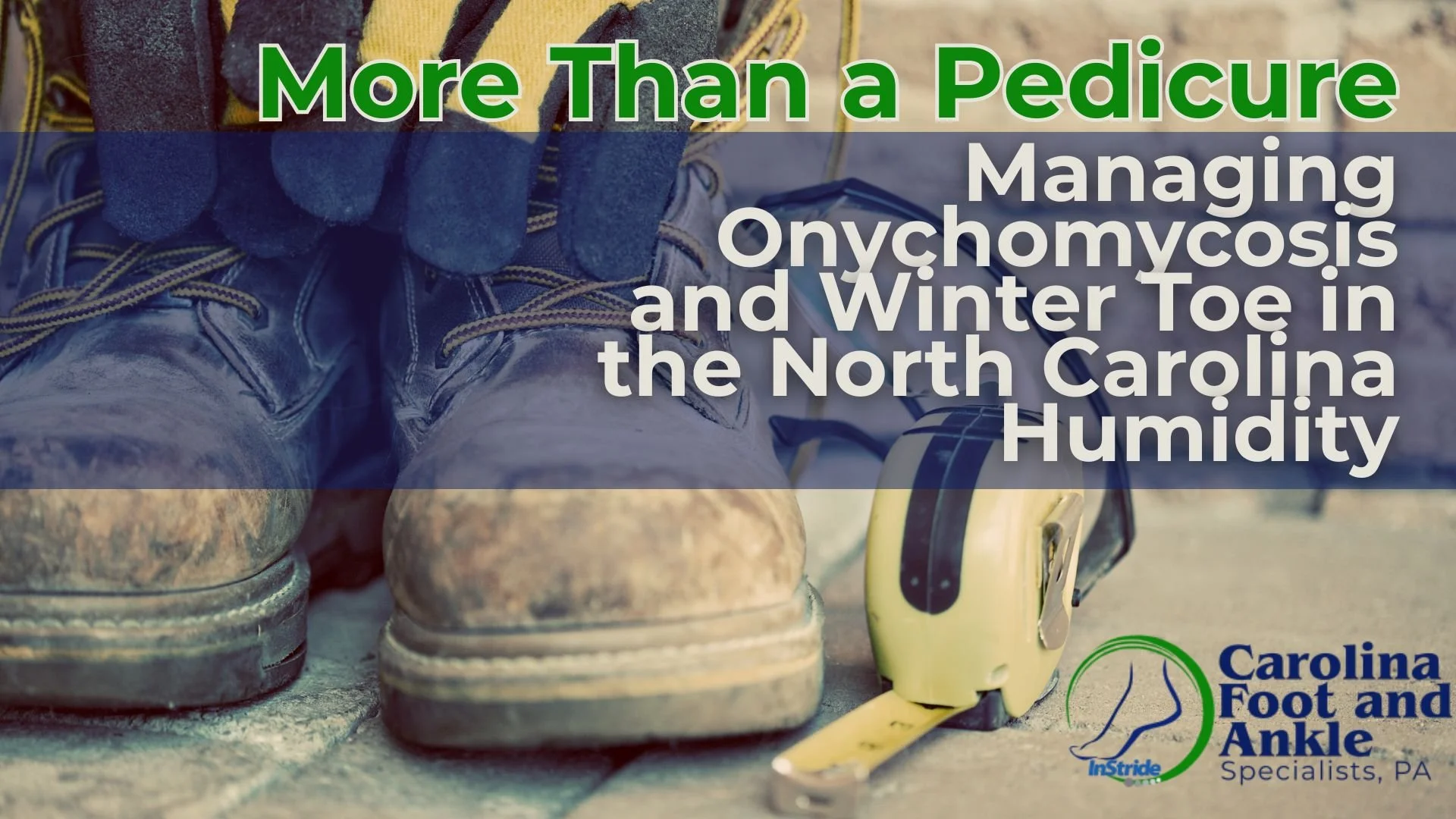
Workboots and other footwear may be a breeding ground for a serious fungal infection that requires more than a pedicure to resolve.
We’ve had some cold weather in Gastonia, Belmont, and the Charlotte metro area this winter, and most people have tucked their sandals away in favor of heavy boots and thick socks. While it’s easy to assume that foot fungus is a summer concern, but we want our patients to know that February is actually a critical month for fungal management.
The unique humidity levels in North Carolina create a "greenhouse effect" inside your footwear. One of the issues with fungal growth and our climate is the fluctuation between freezing morning temperatures that can quickly turn into damp, 60-degree afternoons.
If you’re noticing yellowing, thickening, or brittle texture in your nails, it’s important to note that this isn't just a cosmetic issue to be covered up by socks (although we understand your concern.) The truth is that these changes can suggest a biological infection called Onychomycosis, and winter is often when it does the most damage.
The Greenhouse Effect: Why Winter Boots Are High-Risk
Fungus thrives in environments that are dark, warm, and moist. While summer offers warmth, winter footwear provides the perfect "occlusion", which is a medical term for trapping moisture against the skin and nails.
In the Gastonia area, many of our patients work in trades or industrial environments that require heavy leather work boots or safety toes. These shoes do not breathe, and this is where a big part of the problem starts.
When you pair this type of footwear and these conditions with heavy cotton socks that absorb sweat and hold it against the nail bed, you’re essentially incubating fungal spores for eight to ten hours a day.
This persistent moisture softens the nail plate, making it easier for the fungus to invade deeper into the nail bed. By the time you reach for your sandals in May, a minor winter infection may have transformed into a significant, painful problem over the course of months.
The Biofilm Barrier: Why Over-the-Counter Treatments Fail
One of the most frustrating aspects for patients trying to deal with this problem using OTC products is the failure of drugstore antifungal medications. There is a specific scientific reason for this, and it’s something you may not be aware of: Biofilm.
Fungal colonies are not just sitting on the surface of your nail. They actually create a protective, slimy barrier called a biofilm that prevents topical medications from penetrating the nail plate. Because the nail is made of keratin, which is the same tough protein as your hair, most over-the-counter liquids simply sit on top and eventually wash away.
To successfully treat Onychomycosis, you have to break through that barrier. This is why professional intervention is necessary and why we use specialized tools and medical-grade topicals that are designed to bypass the biofilm and reach the source of the infection beneath.

Biofilm is a slimy film that forms due to bacterial growth, and it can prevent OTC topical medications from effectively treating fungal infections.
A Professional Perspective: The Hidden Fungal Cycle
We often see patients from across Gaston County who are surprised that their nail health declined during the coldest months of the year. Our team has written previously about athletes foot during the winter, and we frequently encounter a scenario where a patient notices their big toe nail is becoming thick and chalky.
In these cases, the patient often lets our podiatrists know that they’ve been wearing the same pair of insulated boots every single day without allowing them to dry out. Our assessment typically reveals that the infection began as a mild case of Athlete’s Foot in the late fall and has gotten more serious since. Because the fungus was trapped in the warm, humid environment of their winter boots, it migrated from the skin to the nails.
By the time they visit our Gastonia office, the fungus has taken hold in the nail matrix. The treatment for this requires a comprehensive approach to hygiene and medicine. We typically focus on:
Professional Debridement
Debridement involves carefully thinning the thickened nail to remove as much of the fungal load as possible and break the biofilm.
Footwear Education
Teaching patients how to use ultraviolet (UV) shoe sanitizers and moisture-wicking materials to prevent the "greenhouse effect" from returning.
Preparing for Spring: Why Now is the Time to Act
If you wait until the weather warms up to address your nail health, it may be too late to see results for the summer. Toenails grow slowly, typically at a pace of only a few millimeters a month. Starting treatment now at Carolina Foot and Ankle Specialists ensures that the healthy, clear nail has time to grow out before you head to Lake Wylie or the coast.
Don't settle for "Winter Toe" or try to hide the problem under layers of polish. If you live in Gastonia, Belmont, or Charlotte, your feet deserve specialized care that understands the local climate and the complexity of fungal pathology.
Get a Head Start on Healthy Nails in Gastonia - Schedule Your Podiatry Appointment Today!
Stop hiding your feet, and start a proven treatment plan today! Call Our Gastonia podiatrists at: (704) 867-7388 to make your appointment now! The team at Carolina Foot and Ankle Specialists is ready to help you achieve clear, healthy nails just in time for the North Carolina spring.